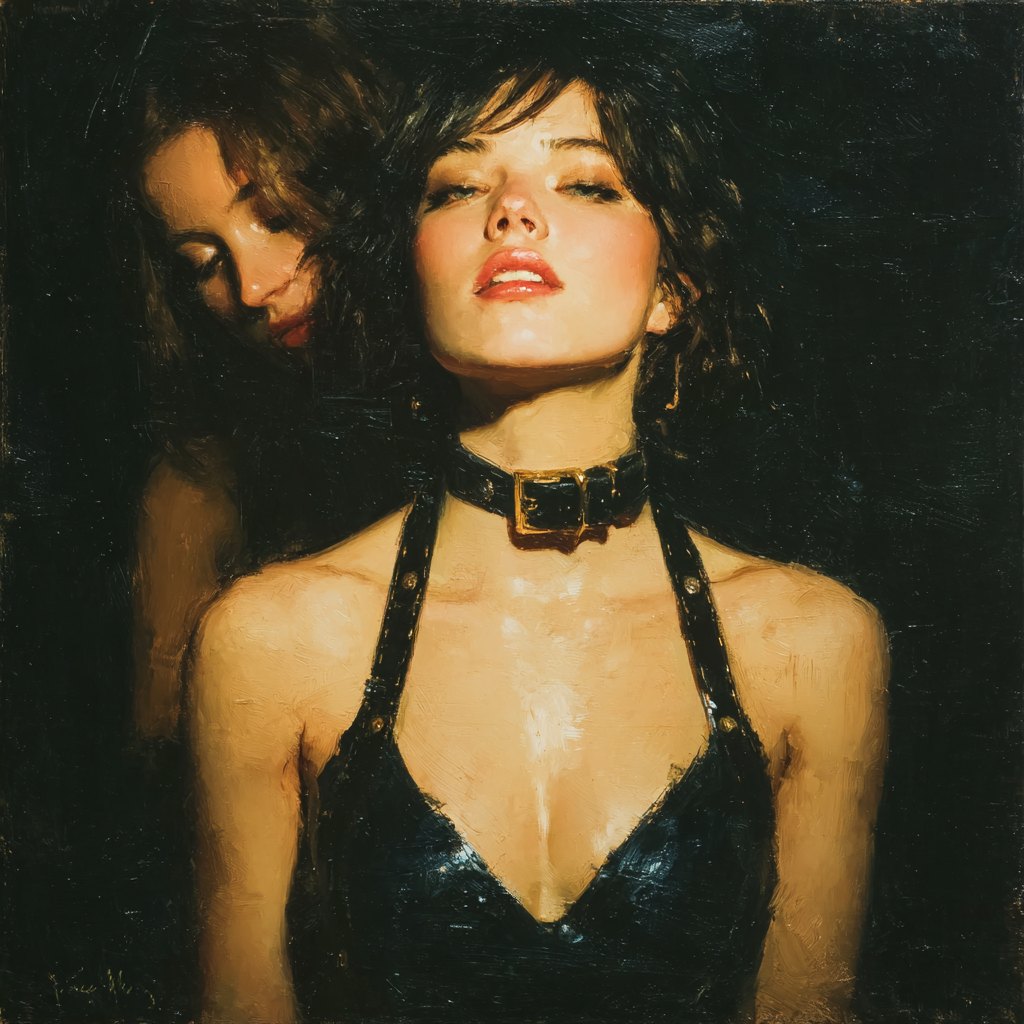
Begin with the object itself. Leather, cut and finished, an inch or so at its widest. A steel buckle, sometimes a D-ring, sometimes a small lock that serves no security purpose and everyone understands is not meant to. It has weight — more than you would expect, enough that the wearer is aware of it through the whole of an evening, a constant low pressure at the throat. It warms to the body. It creaks faintly when she turns her head. It is, in every literal sense, a small band of material fastened around the most vulnerable part of a person.
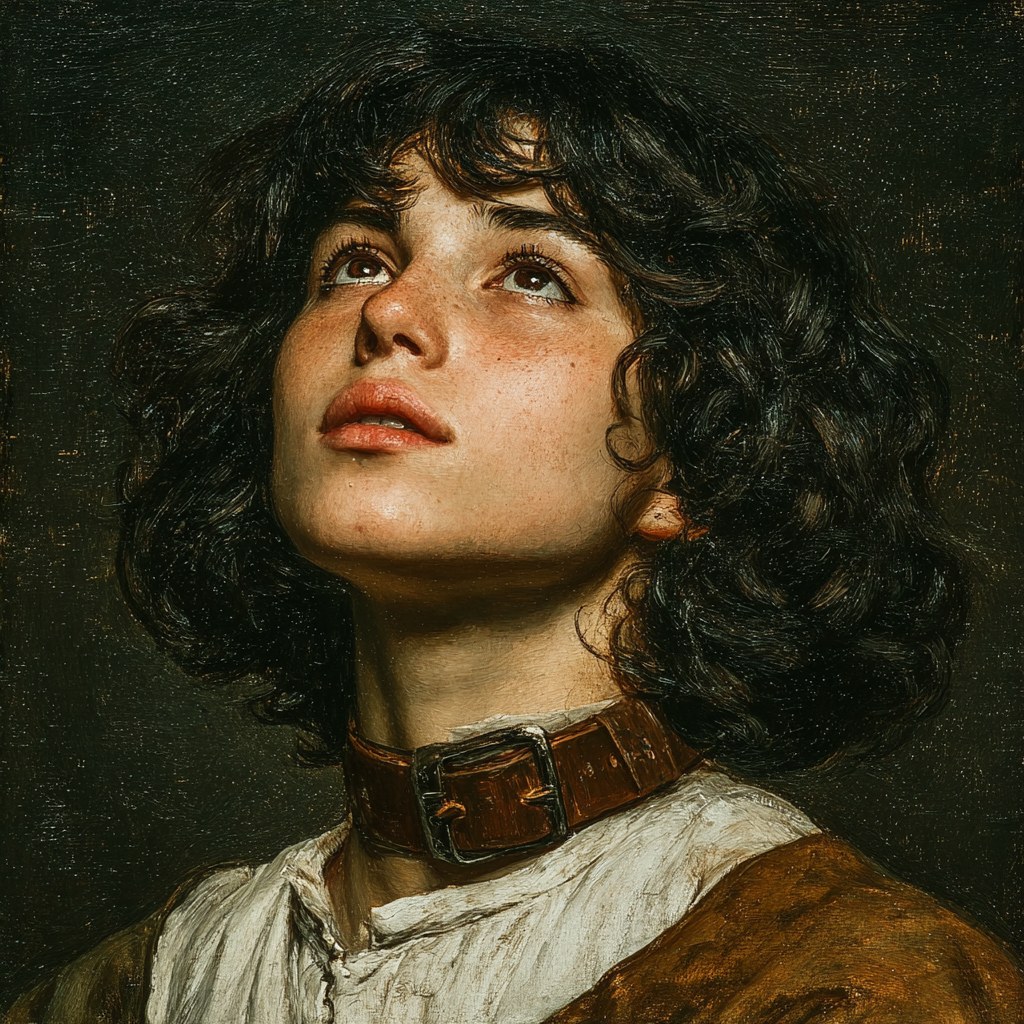
This is the thing people think they understand at a glance. They are almost always wrong about it.
The collar reads, to the uninitiated eye, as an instrument of captivity. Something done to a person. The whole visual grammar of restraint — the throat, the fastening, the implied tether — arrives pre-loaded with a century of associations that all point the same direction: control imposed, freedom removed, a person reduced to something kept. It is an easy reading. It is also precisely backward.
Because the collar was her idea.
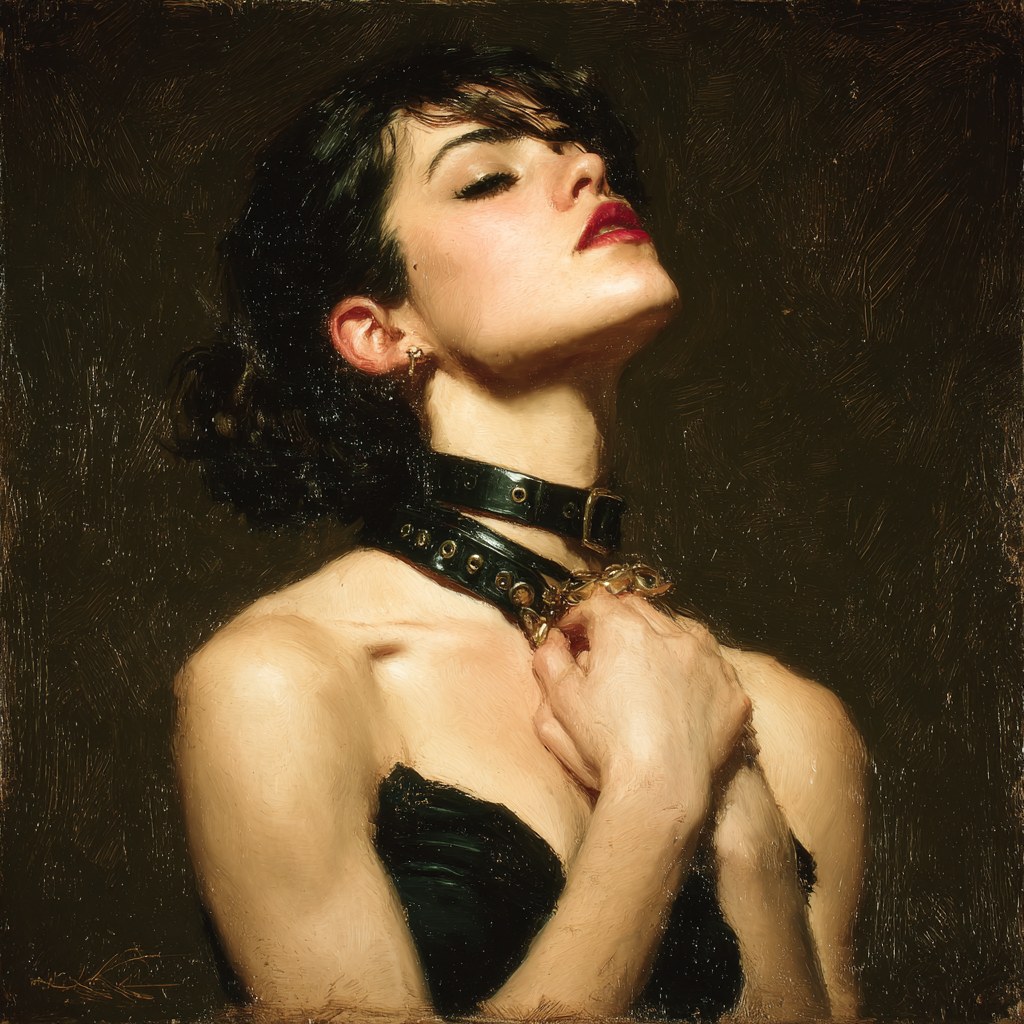
That is the fact the image never quite tells you and the essay can. The woman wearing it is not a captive. She is an author. She has looked at the whole architecture of her own autonomy — the endless small sovereignties of an ordinary life, the thousand daily decisions, the exhausting labor of being a self in full — and she has chosen, deliberately and with her eyes open, to set a portion of it down. Not to have it taken. To give it. The distinction is everything, and it is the entire subject of this studio.
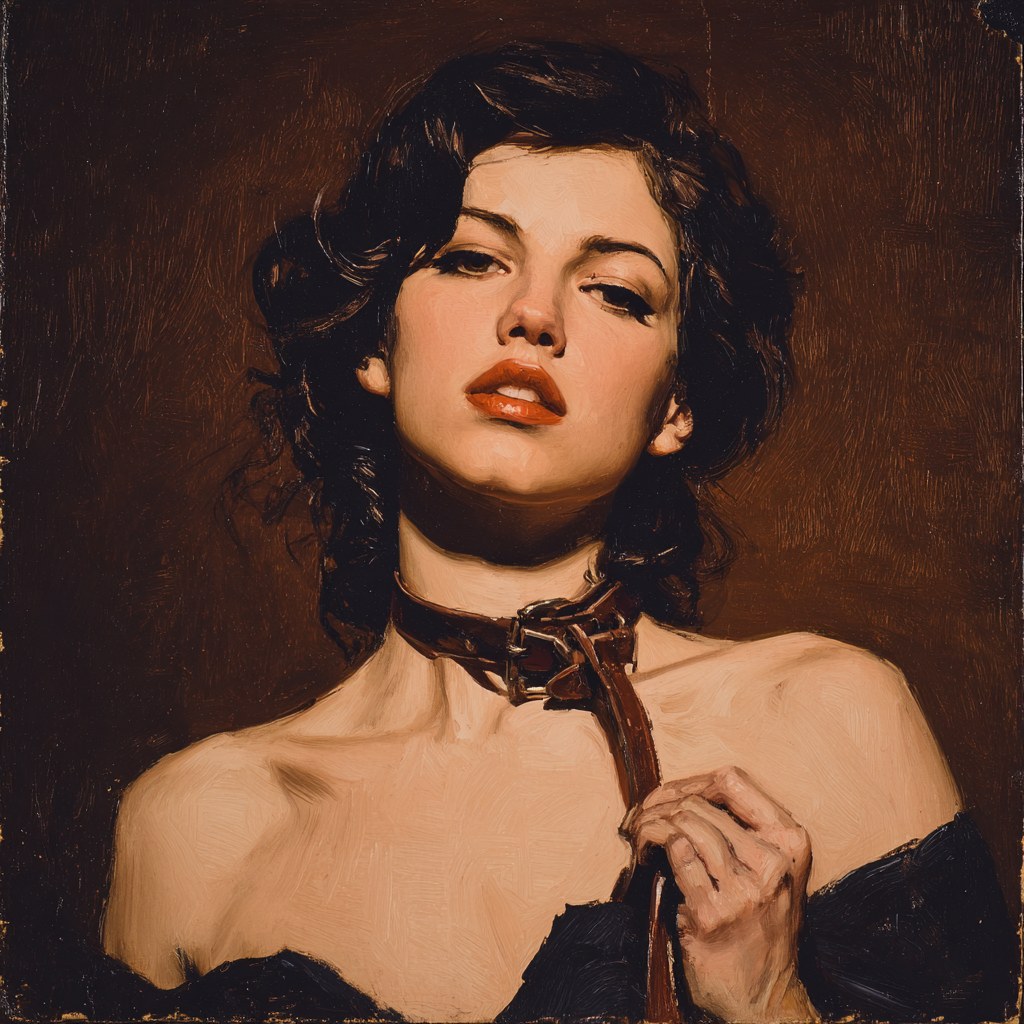
There is a particular tyranny in unlimited freedom that no one warns you about. The self that must decide everything, defend everything, hold everything, is a self under a kind of siege. What the collar offers — what the wearer reaches for — is not the erasure of that self but its relief. A defined edge. A place where the deciding stops and something quieter begins. She is not less free with it on. She is free of a specific weight she chose to hand to someone she trusts more than she trusts her own fear.
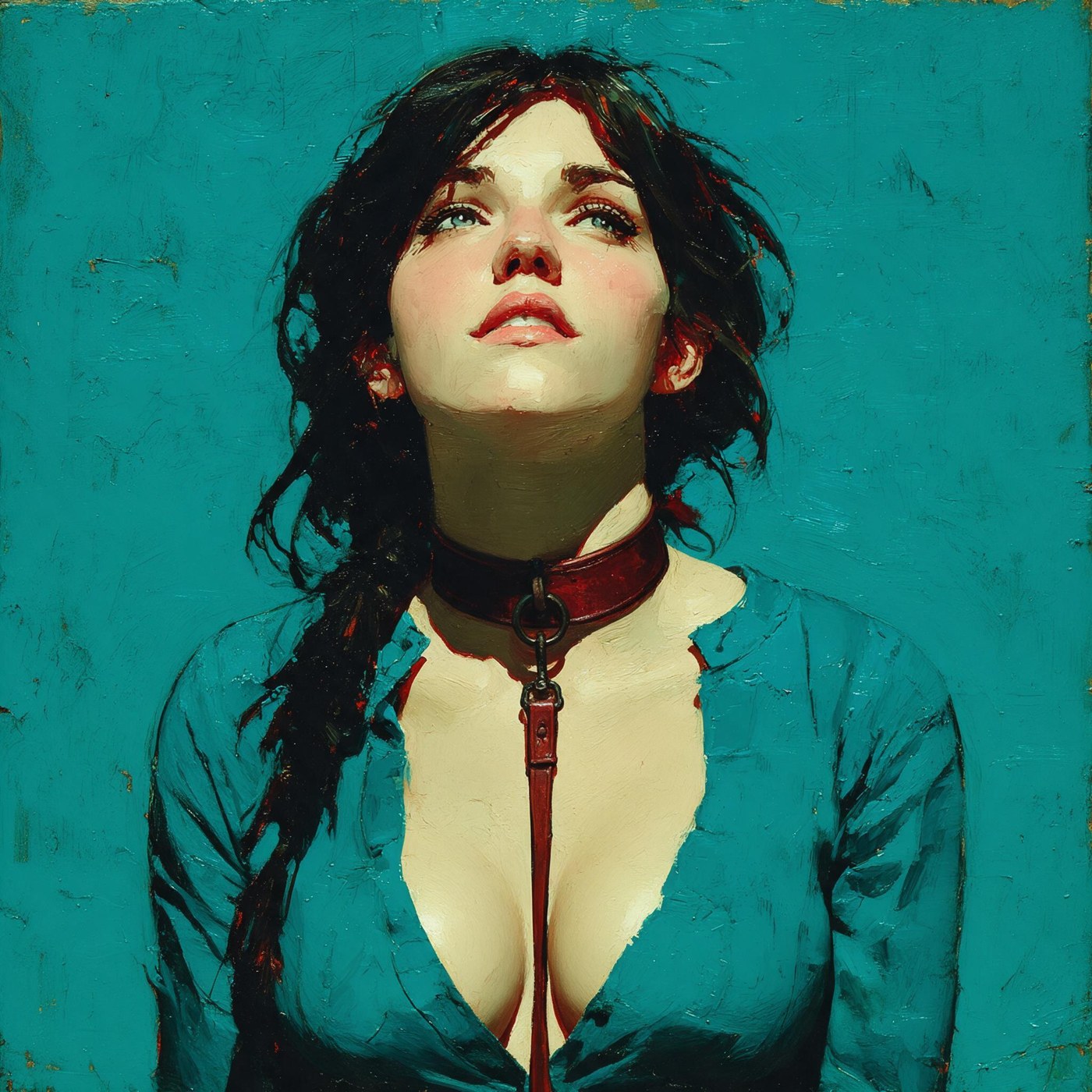
The buckle is where this happens, and it happens as a sound. The click is not incidental. It is the entire event compressed into a single audible instant — the moment the decision finishes, becomes real, becomes irreversible in the way that only chosen things can be. Before the click: possibility, negotiation, the open field. After it: a settled fact. Some women describe exhaling for the first time in years at exactly that sound. This is not submission in the way the word is usually spent. It is arrival. The bravest thing she ever did was stop being brave.
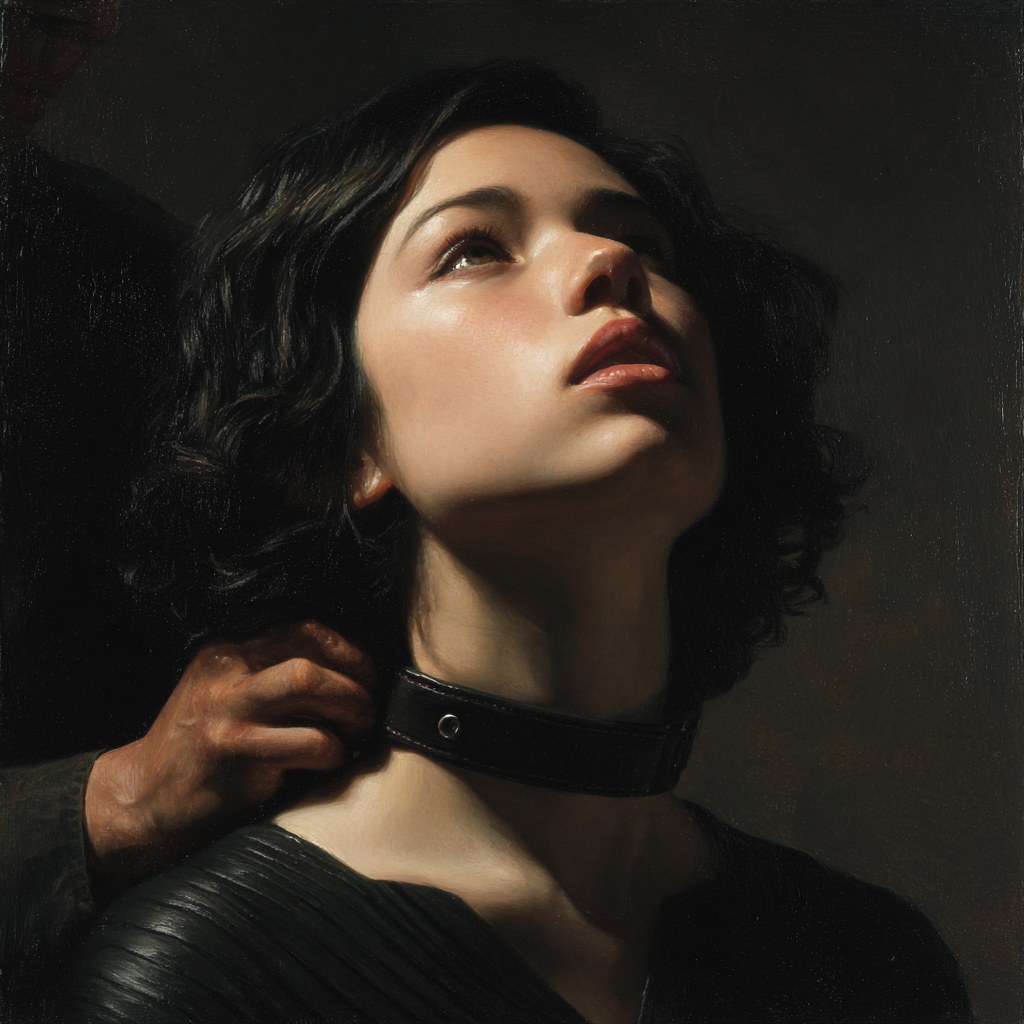
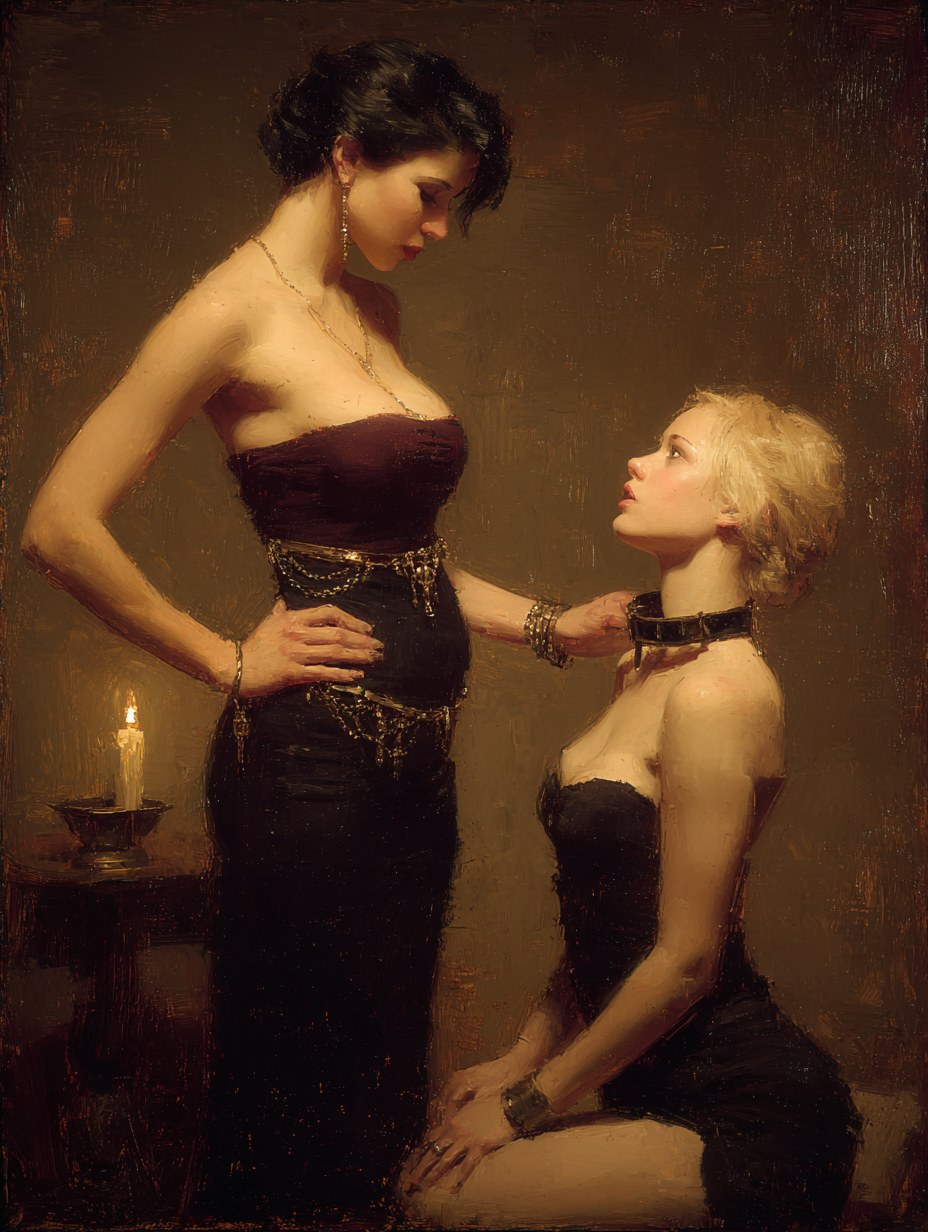
And here is the part the easy reading cannot account for at all: the one who fastens it is not more free than the one who wears it. The standing figure and the kneeling figure are bound by the same object, in opposite directions, with equal completeness. To hold the leash is also to be held by it — to accept the weight of another person’s trust, which is heavier than any collar. The dynamic only works because both of them chose it. Remove the choice from either end and the whole thing collapses into the ugly thing the uninitiated assumed it was. Keep the choice, and it becomes what it actually is: two people, each exactly where she wants to be, connected by a small band of leather that means the opposite of what it looks like.
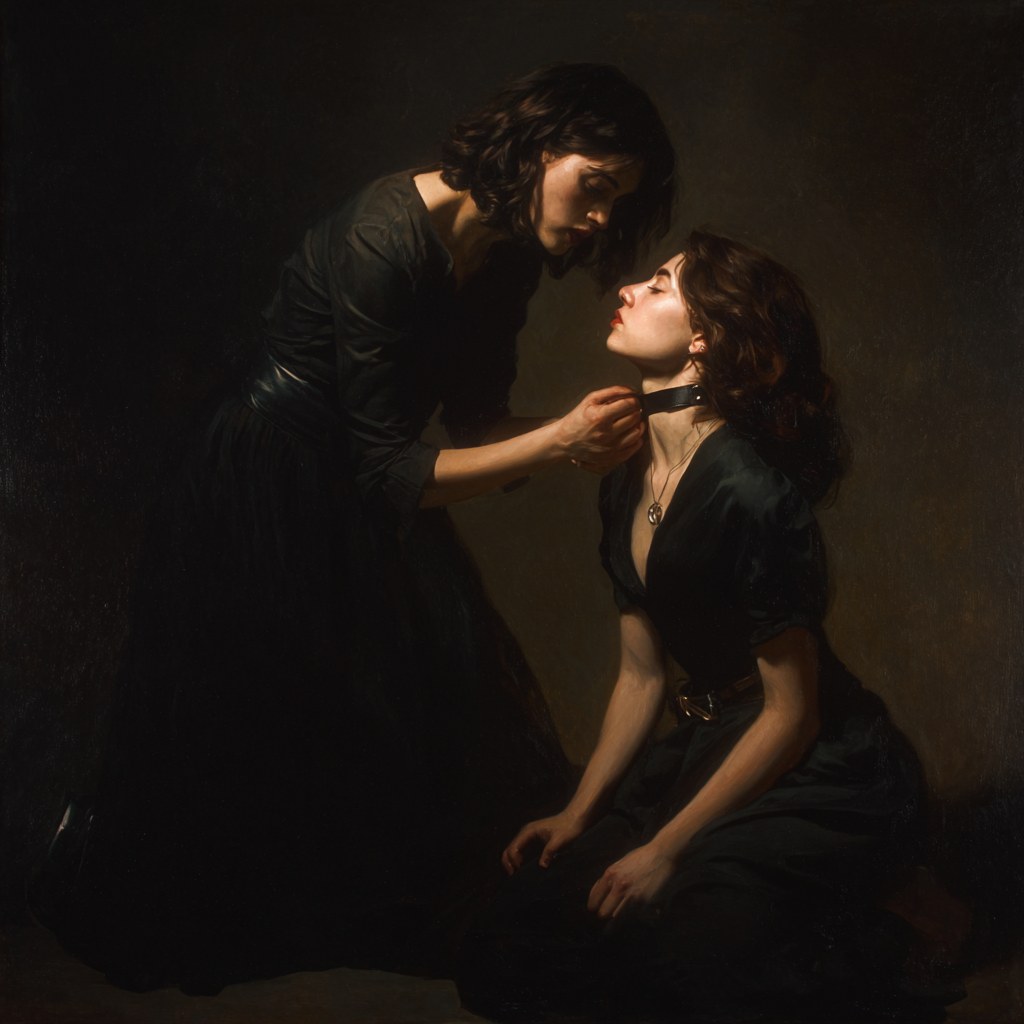
This is why the collar sits at the center of everything made here. Not because it is provocative — though it is — but because it is the most honest object we know for the thing this studio is actually about. Beauty that consents to be bound. Freedom that expresses itself as devotion. The pleasure of control and the control of pleasure, which turn out, on close inspection, to be the same thing viewed from two sides.
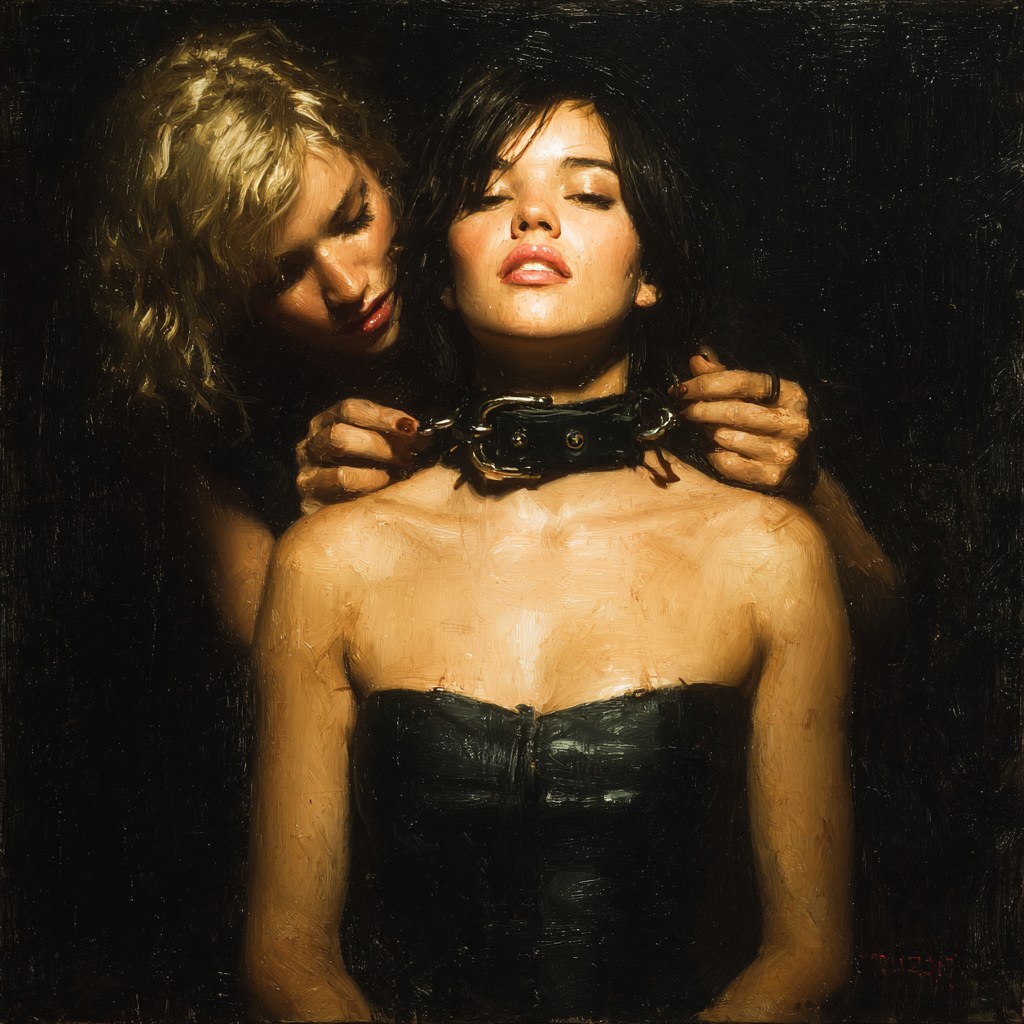
She touches it in the dark, sometimes, to remember who she is.
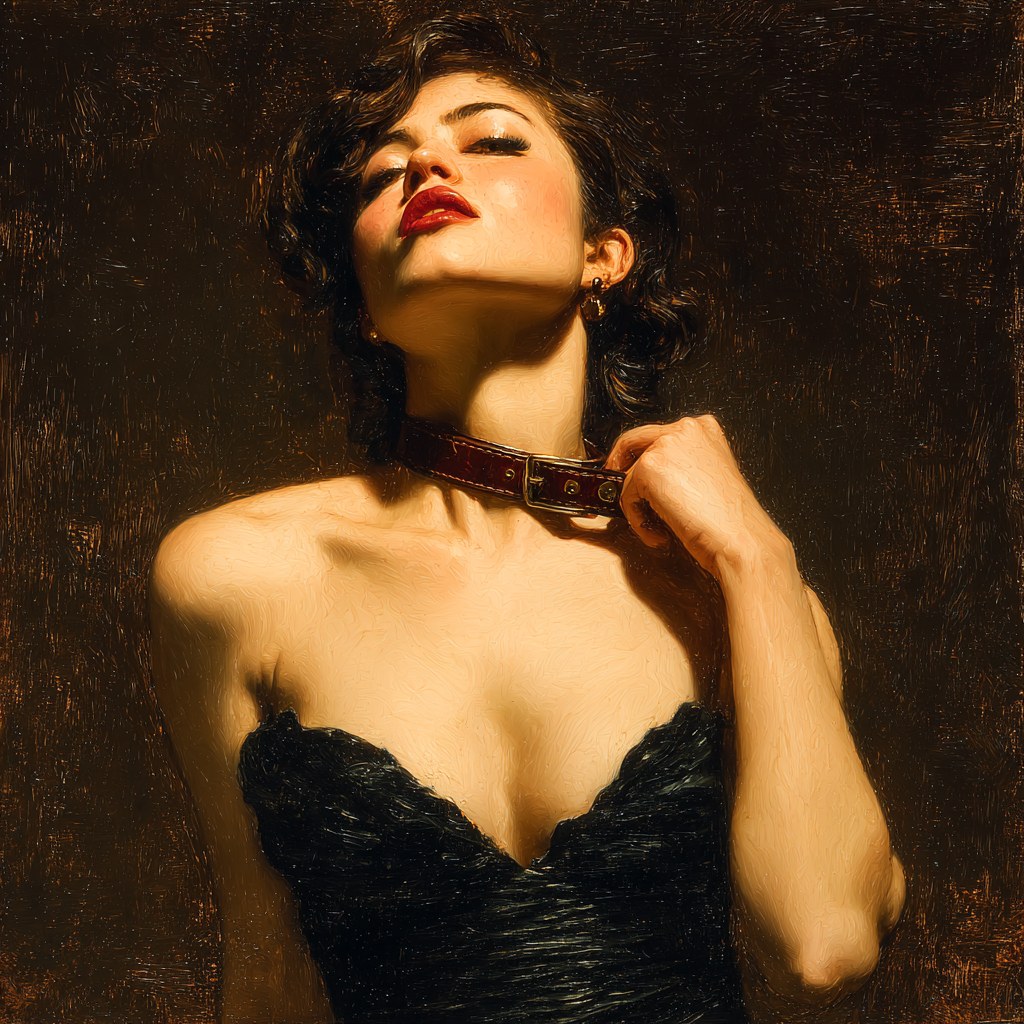
That is not the gesture of a captive. That is the gesture of someone who has finally found the shape of her own life and reaches up, in the quiet, to feel its edge.